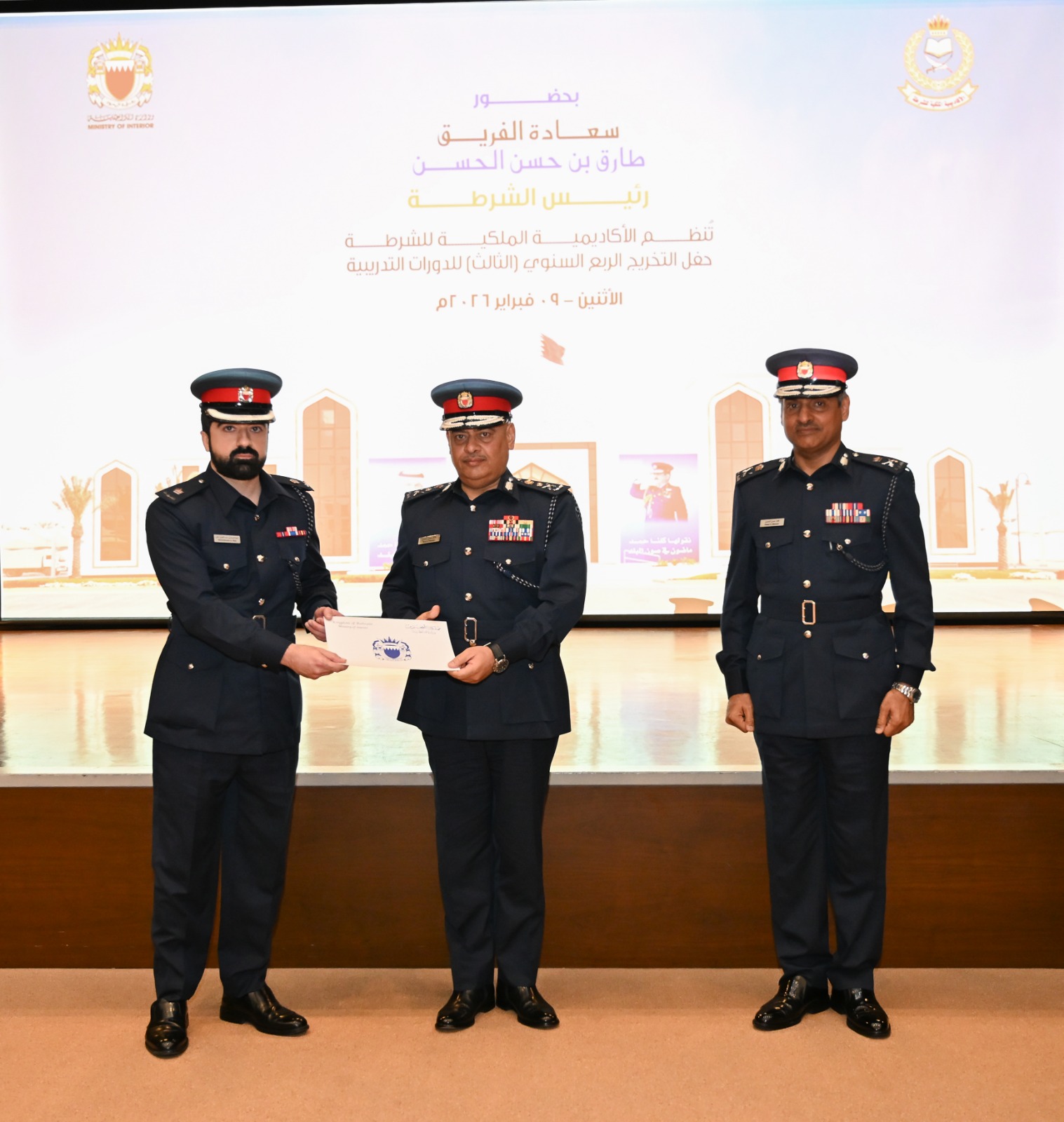
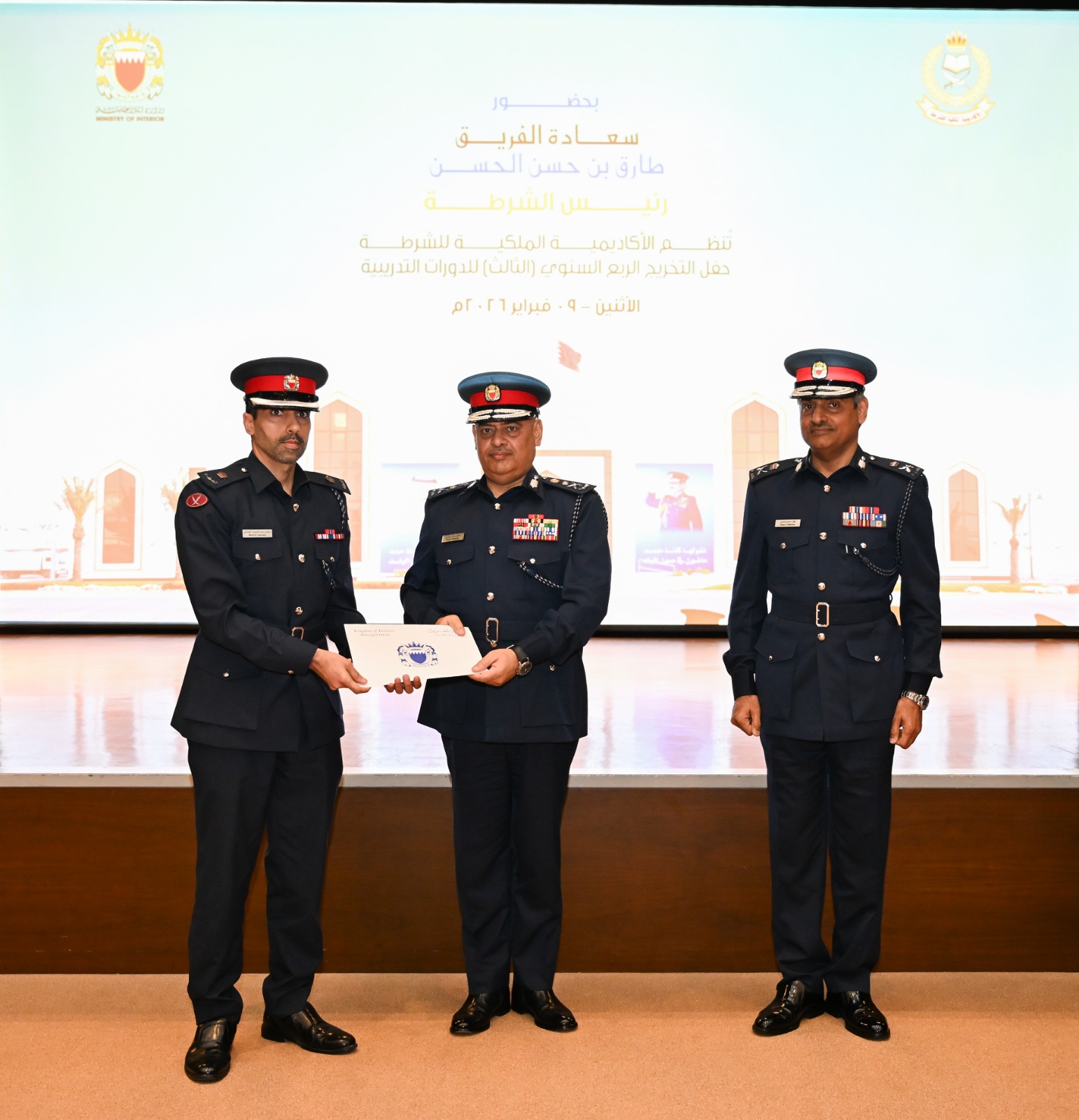
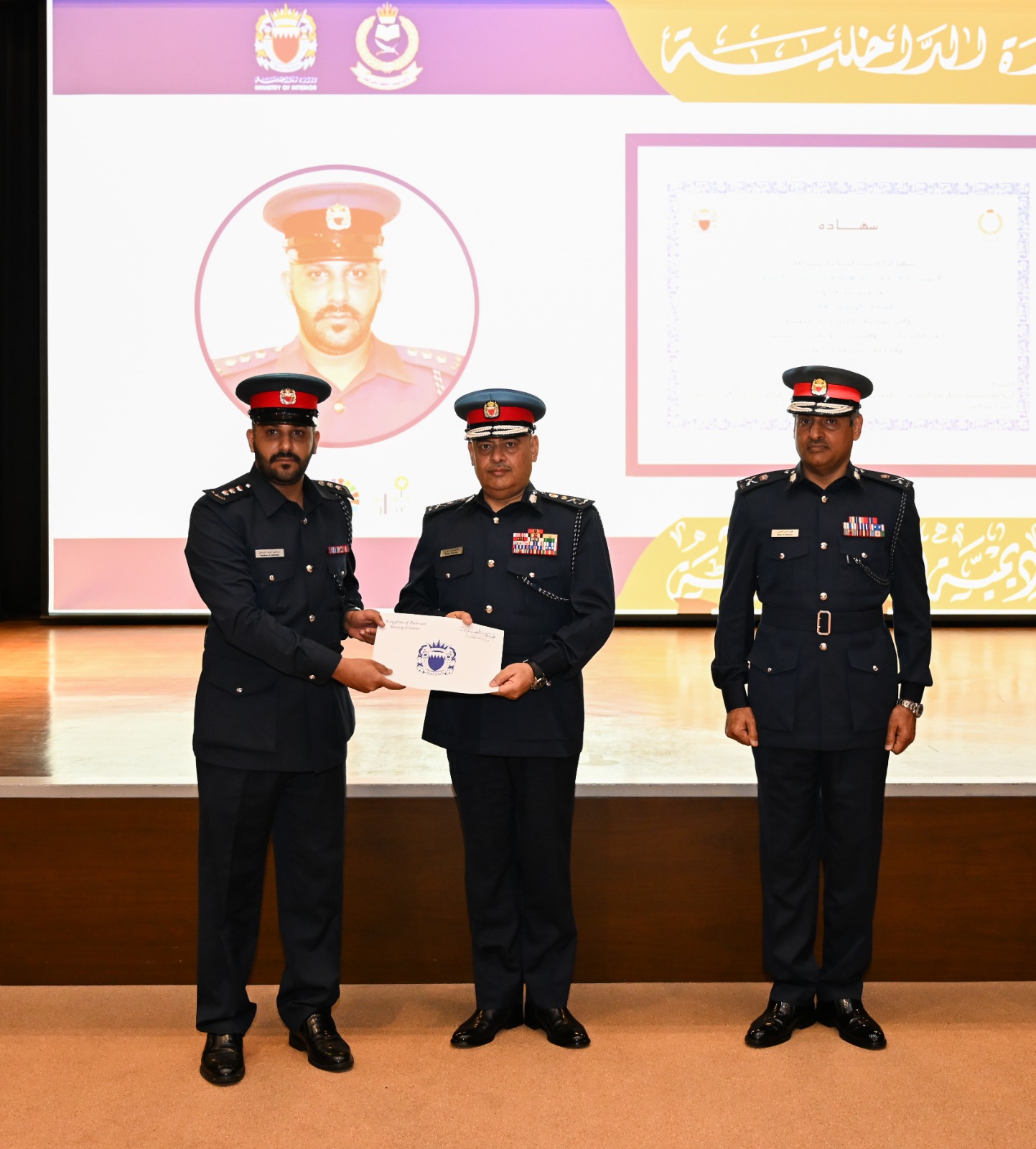
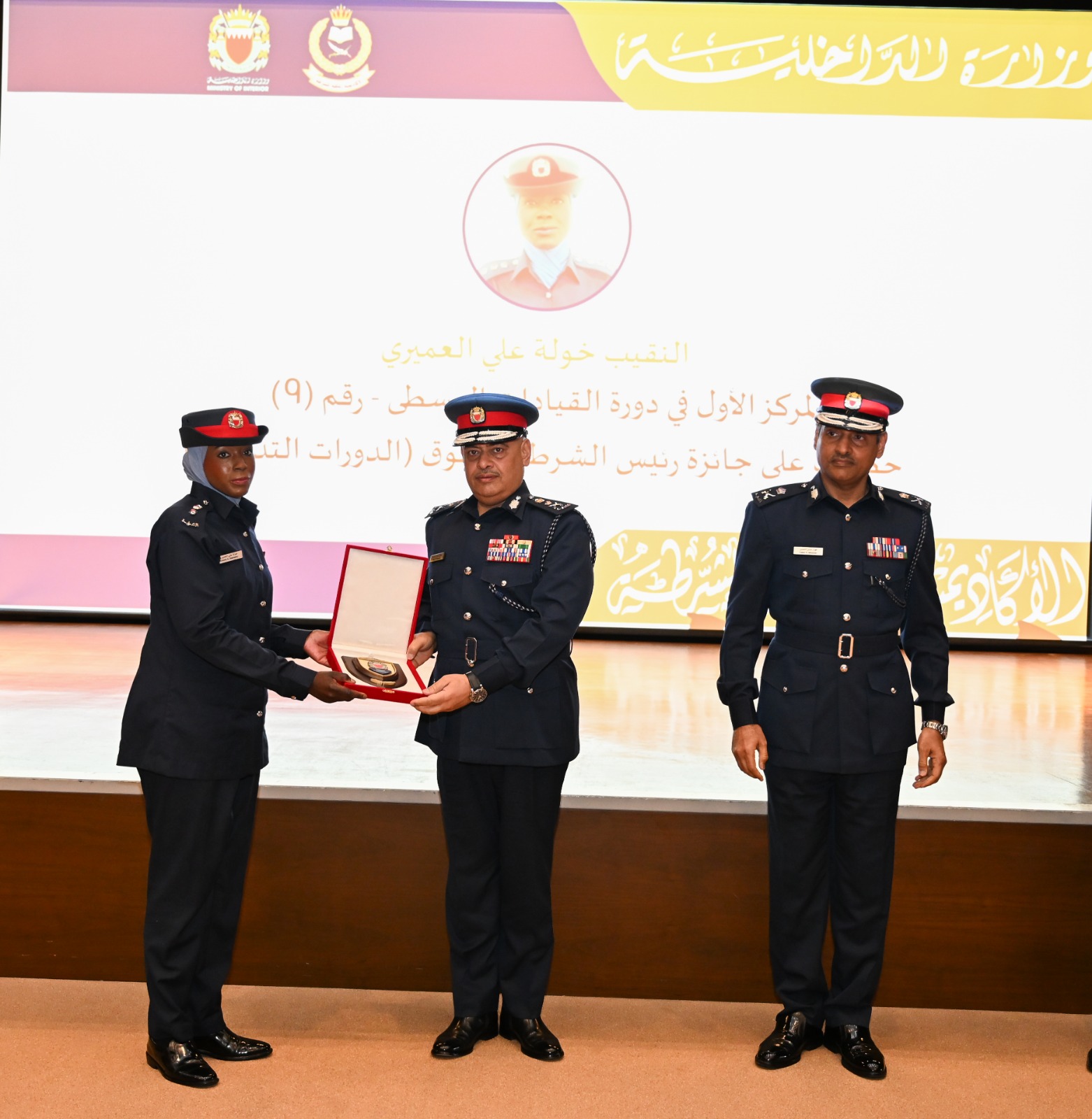
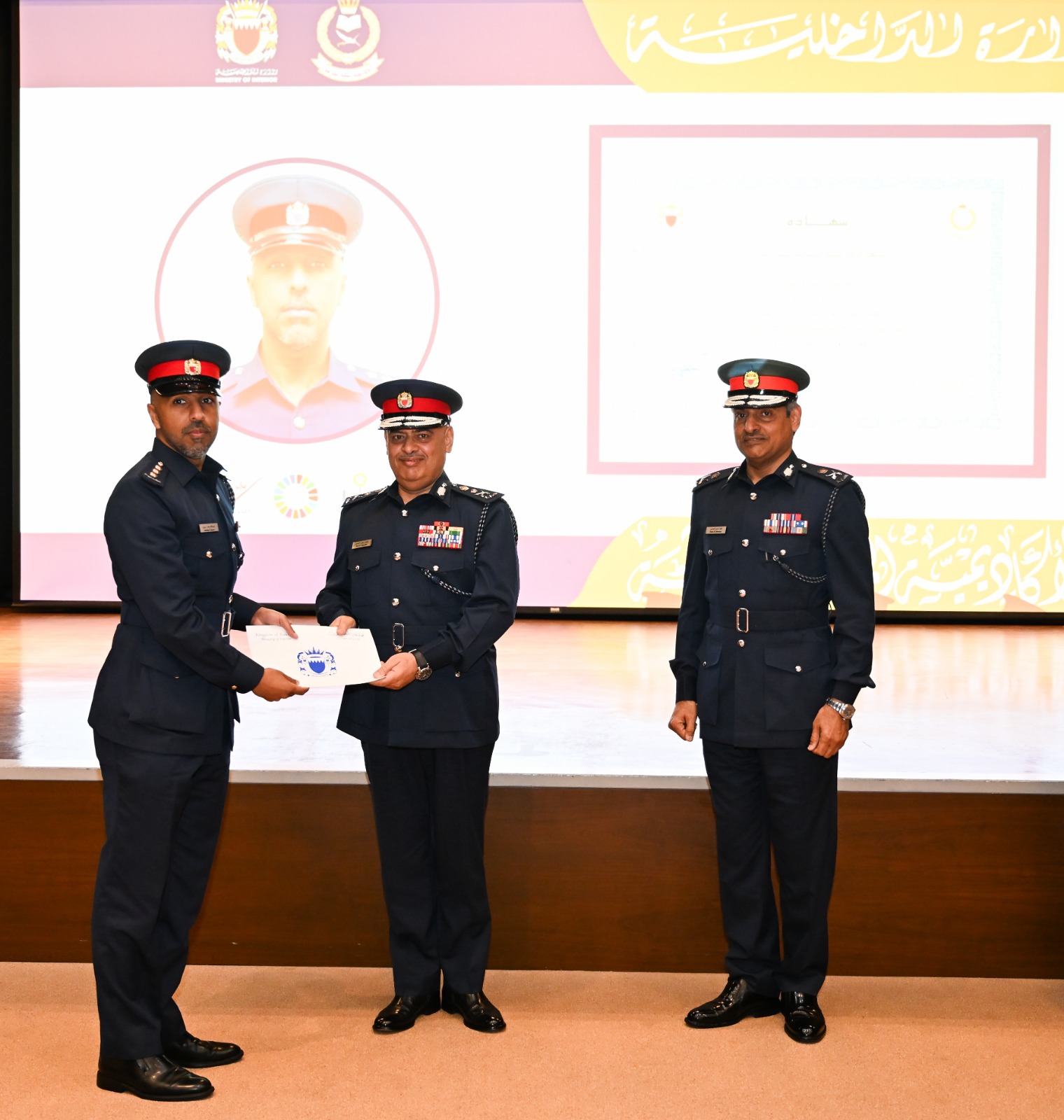
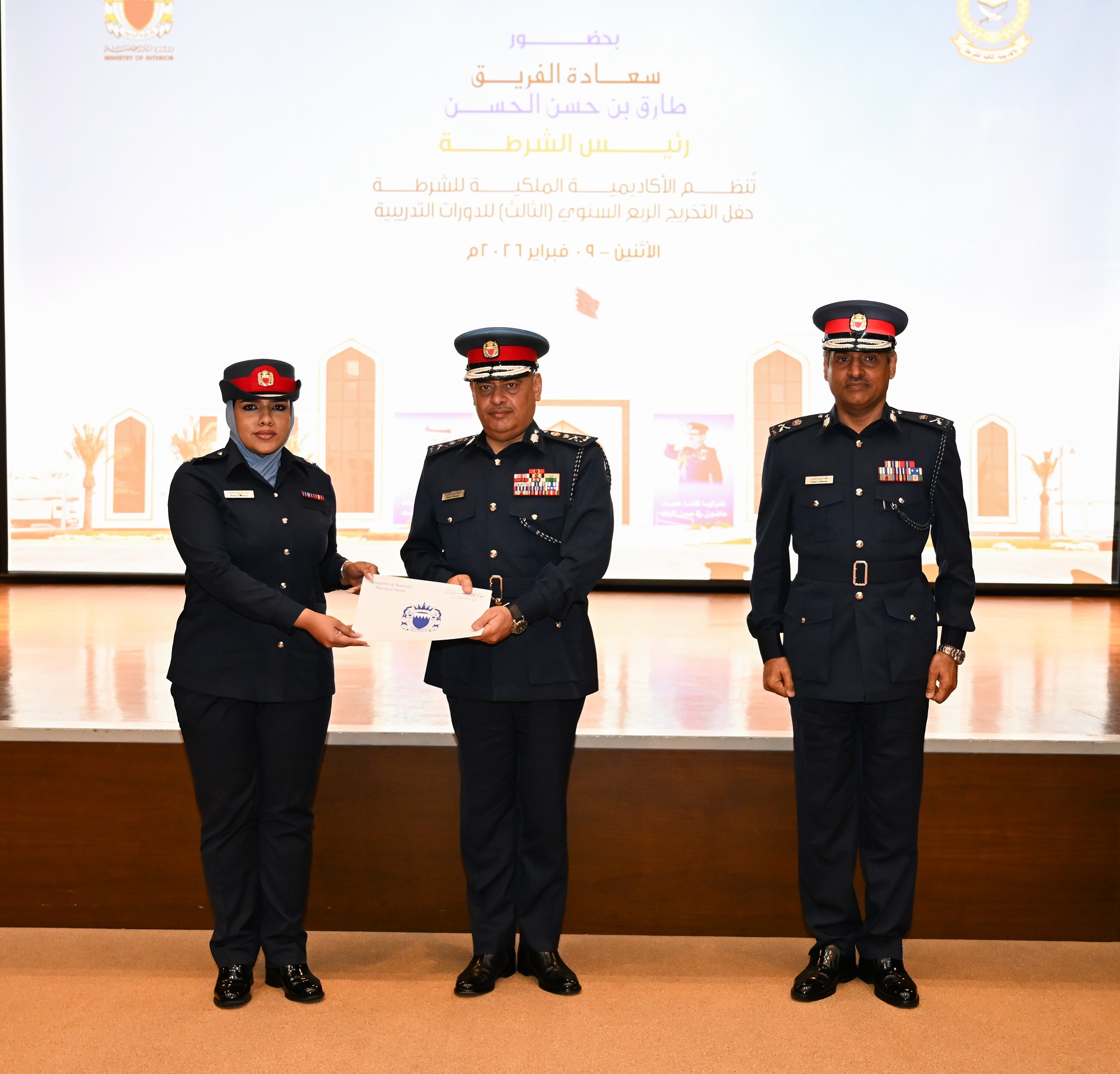
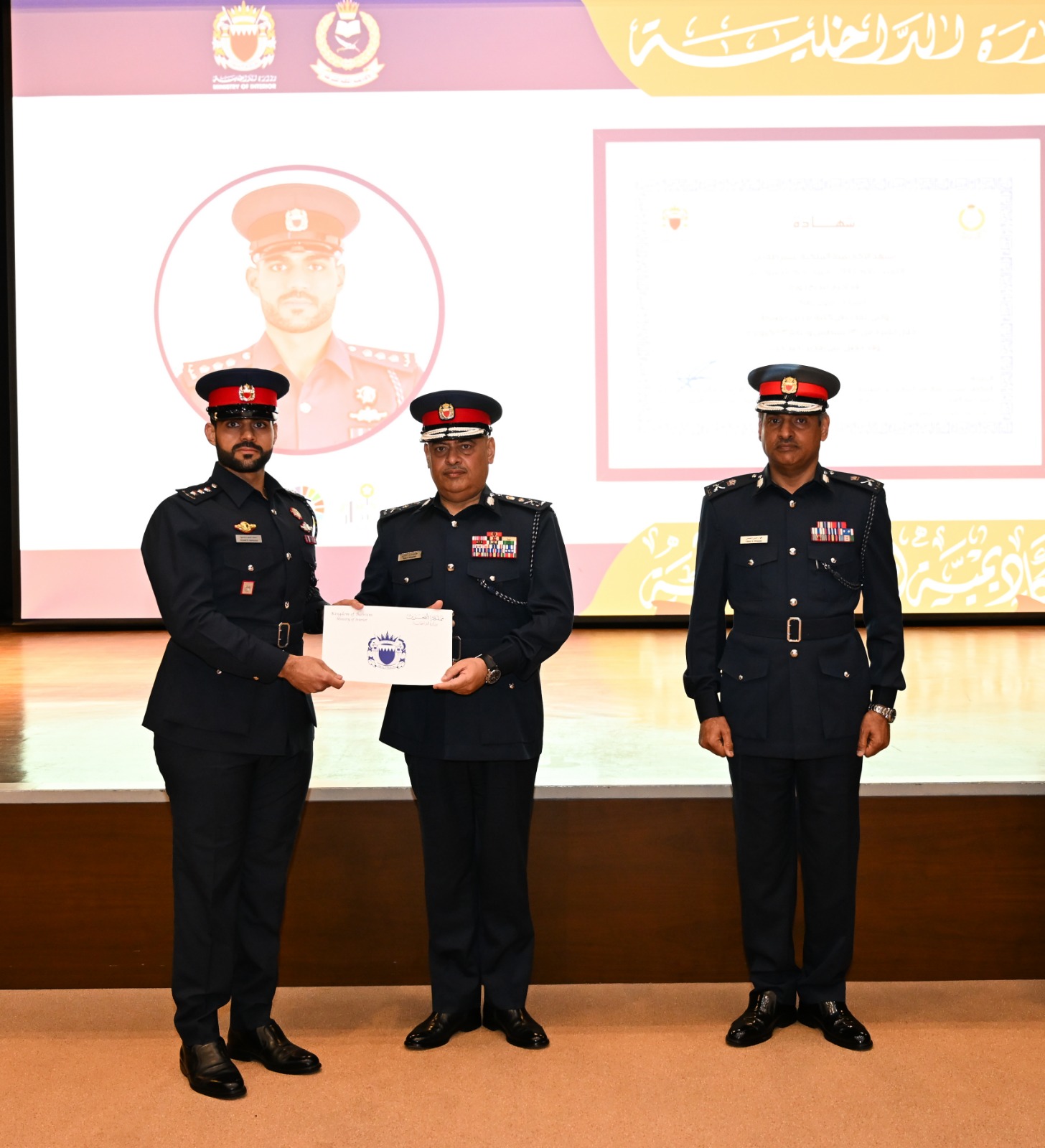
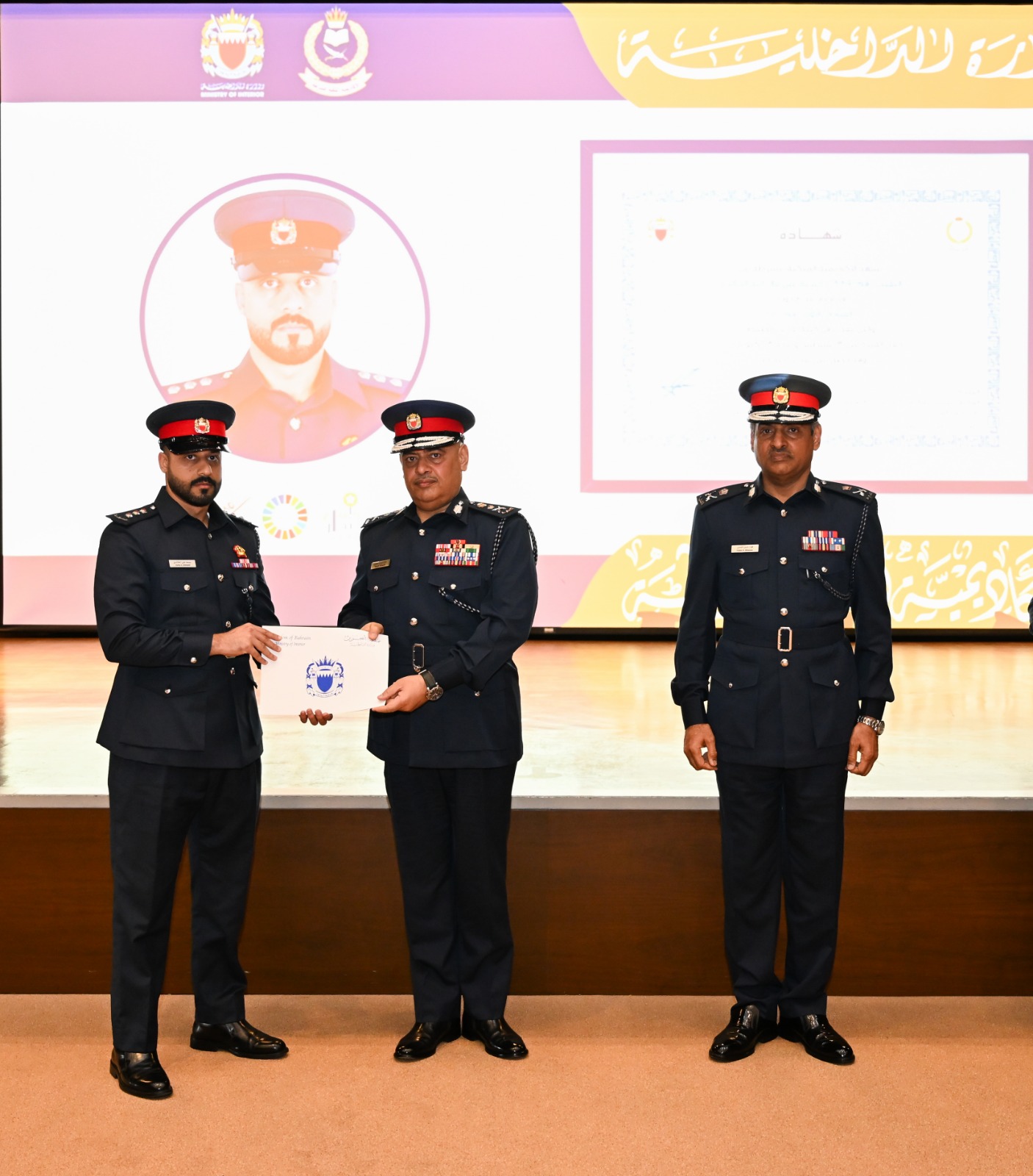
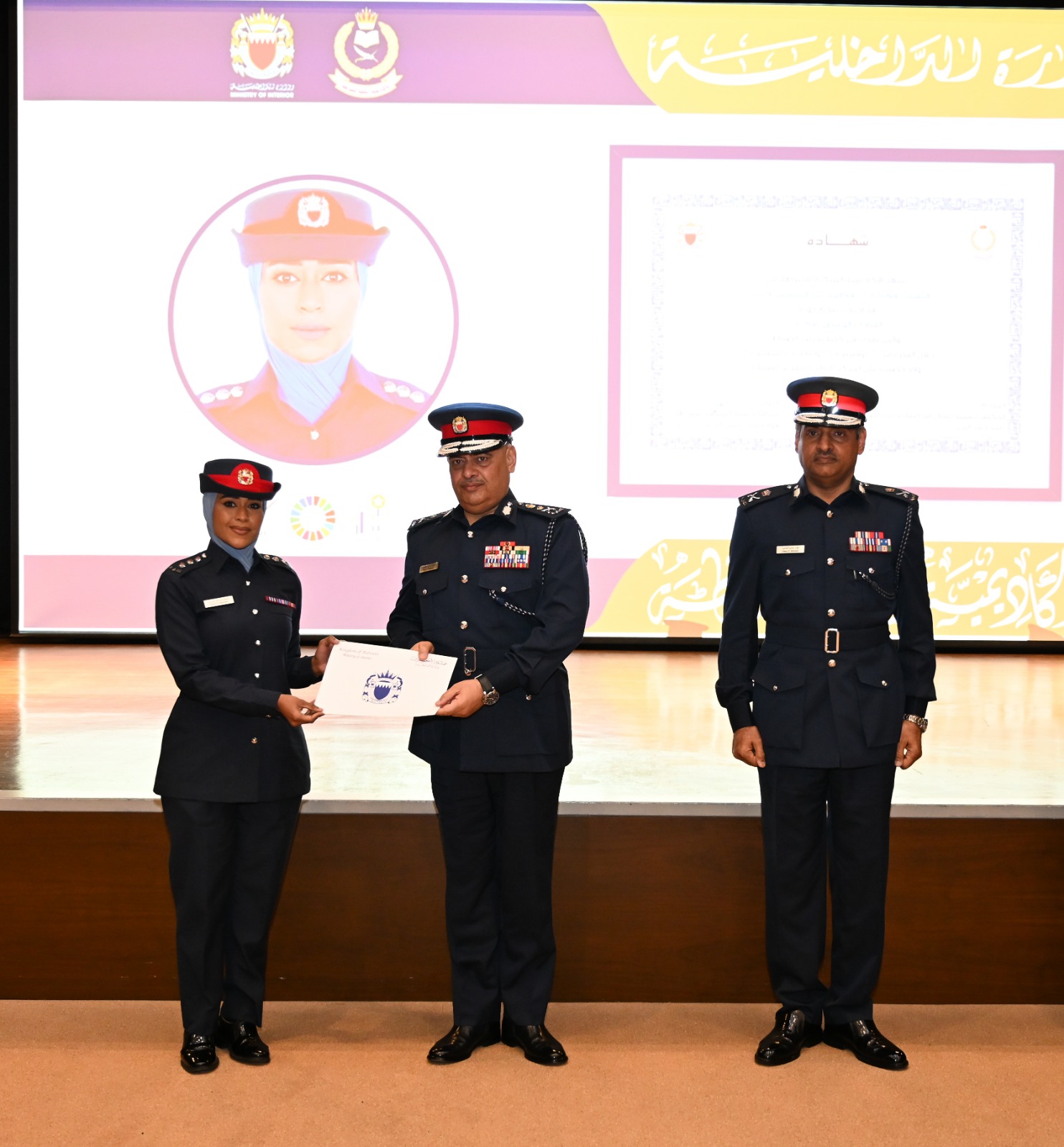
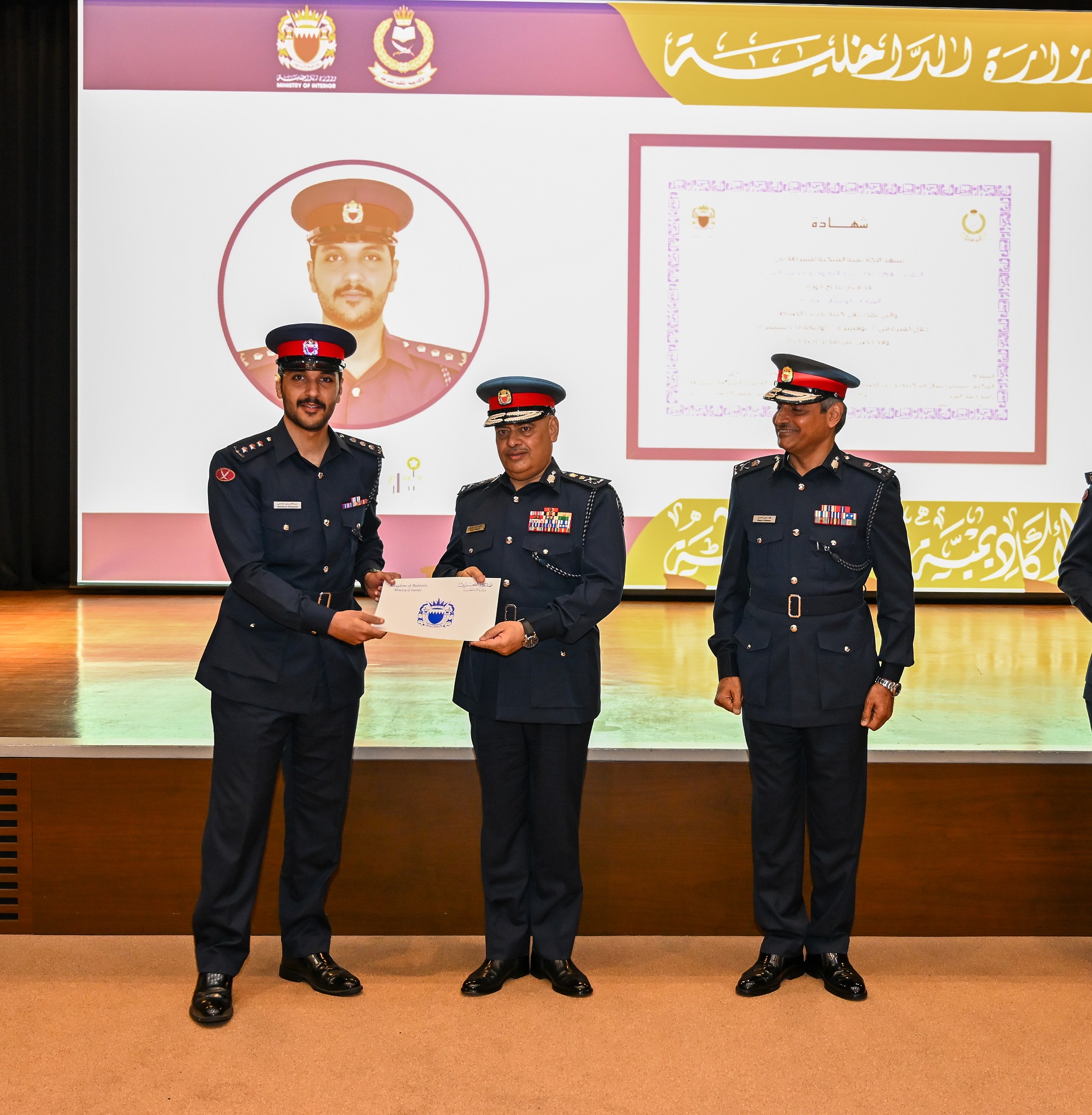
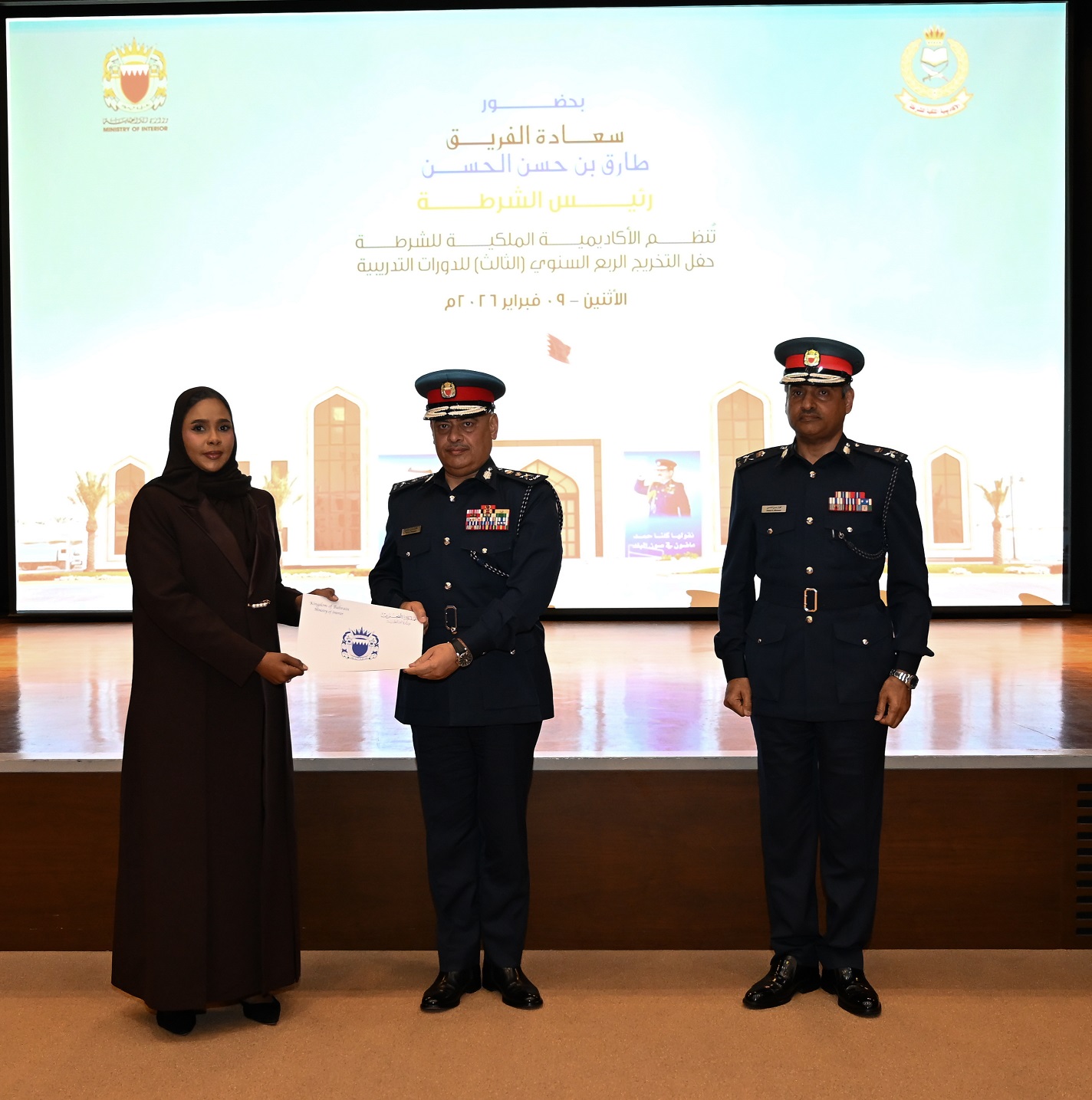
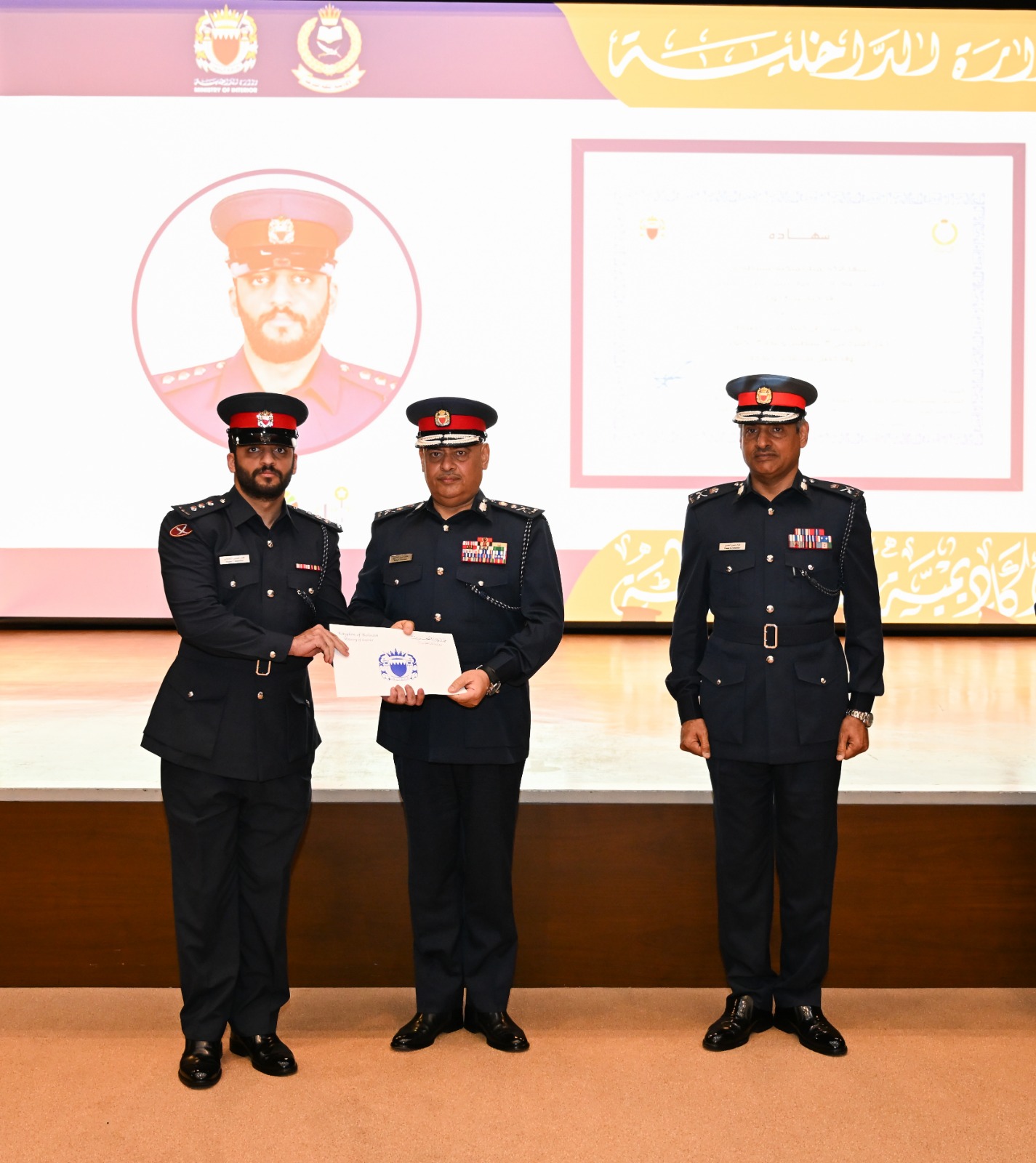
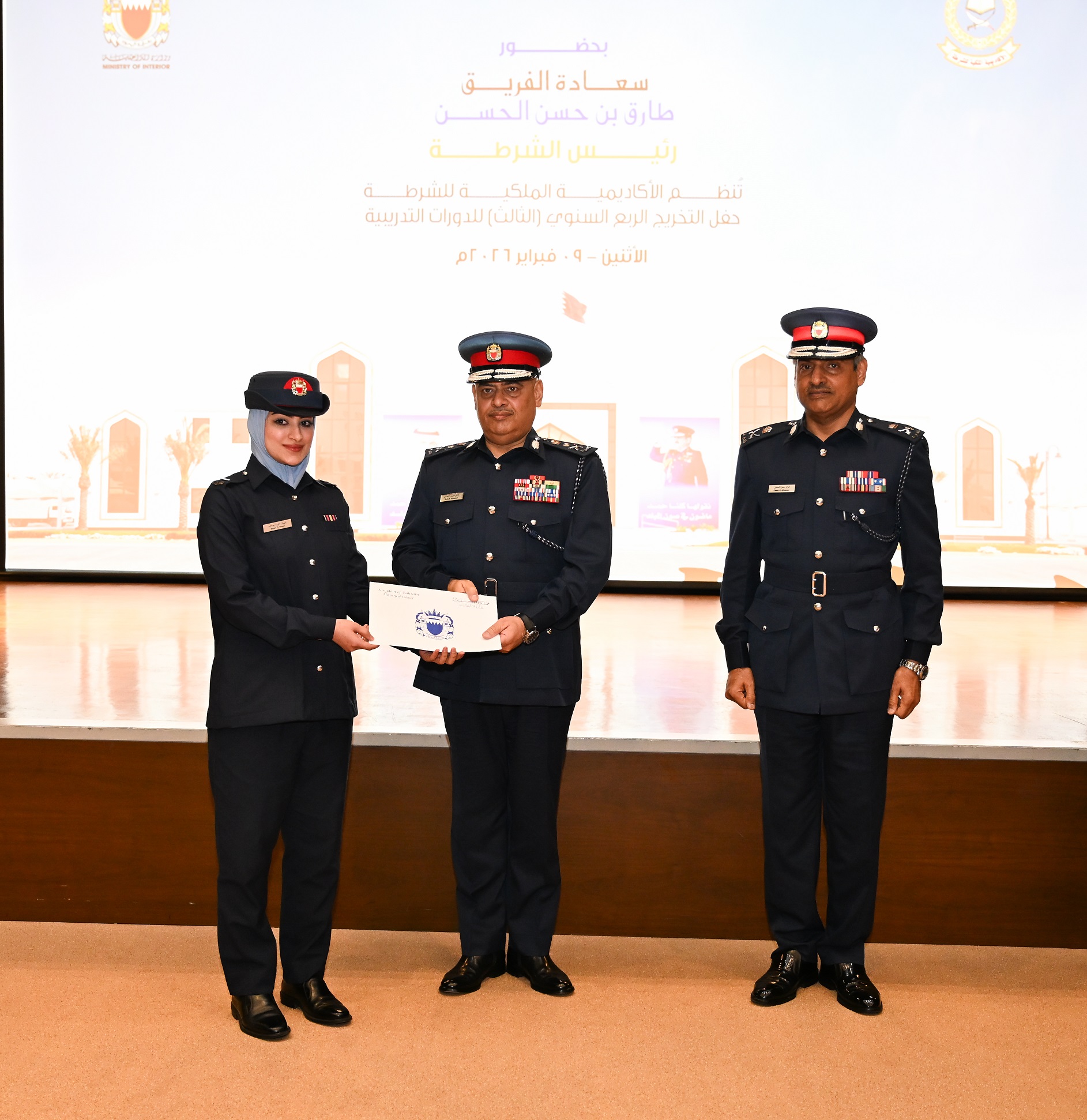
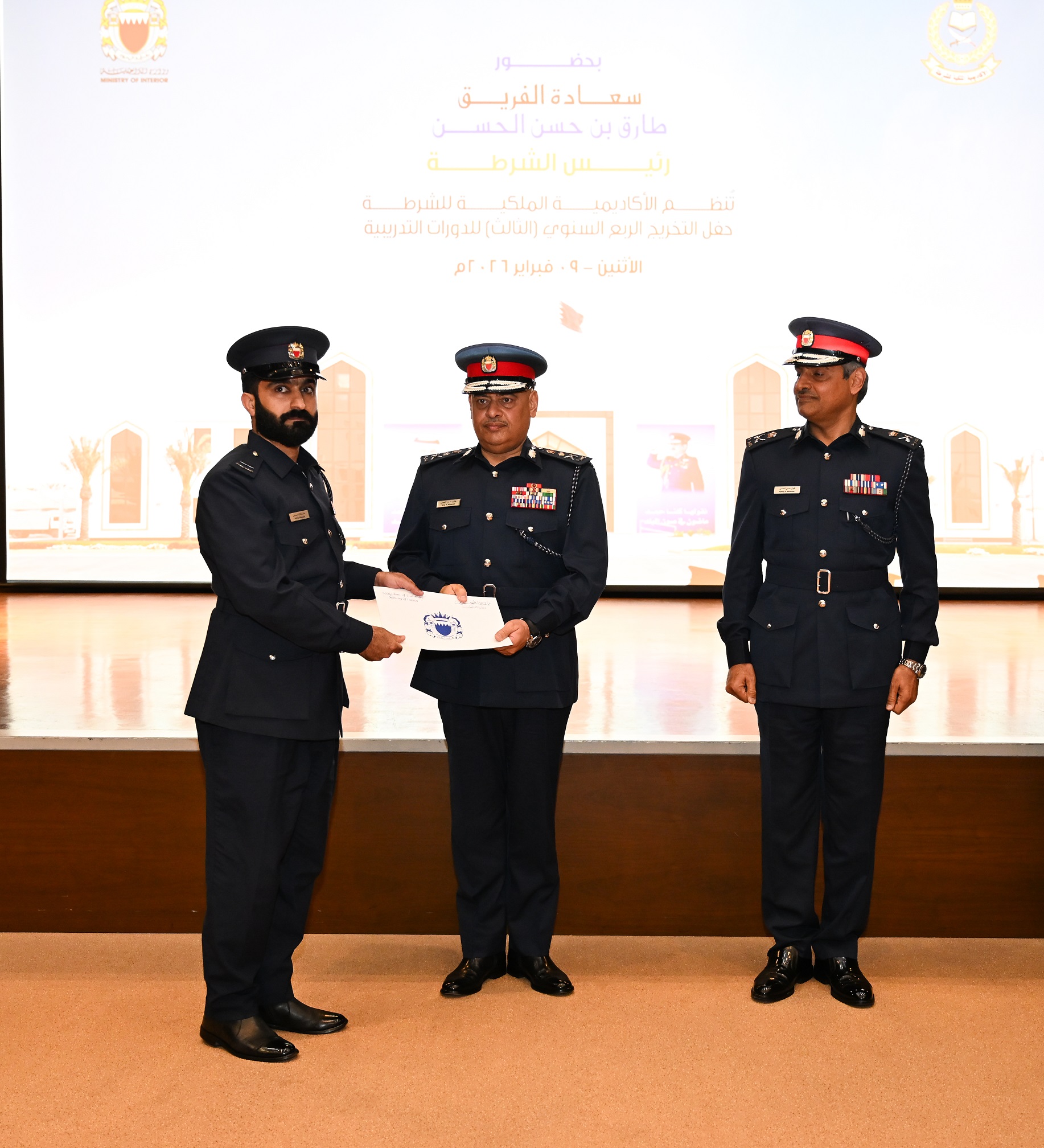
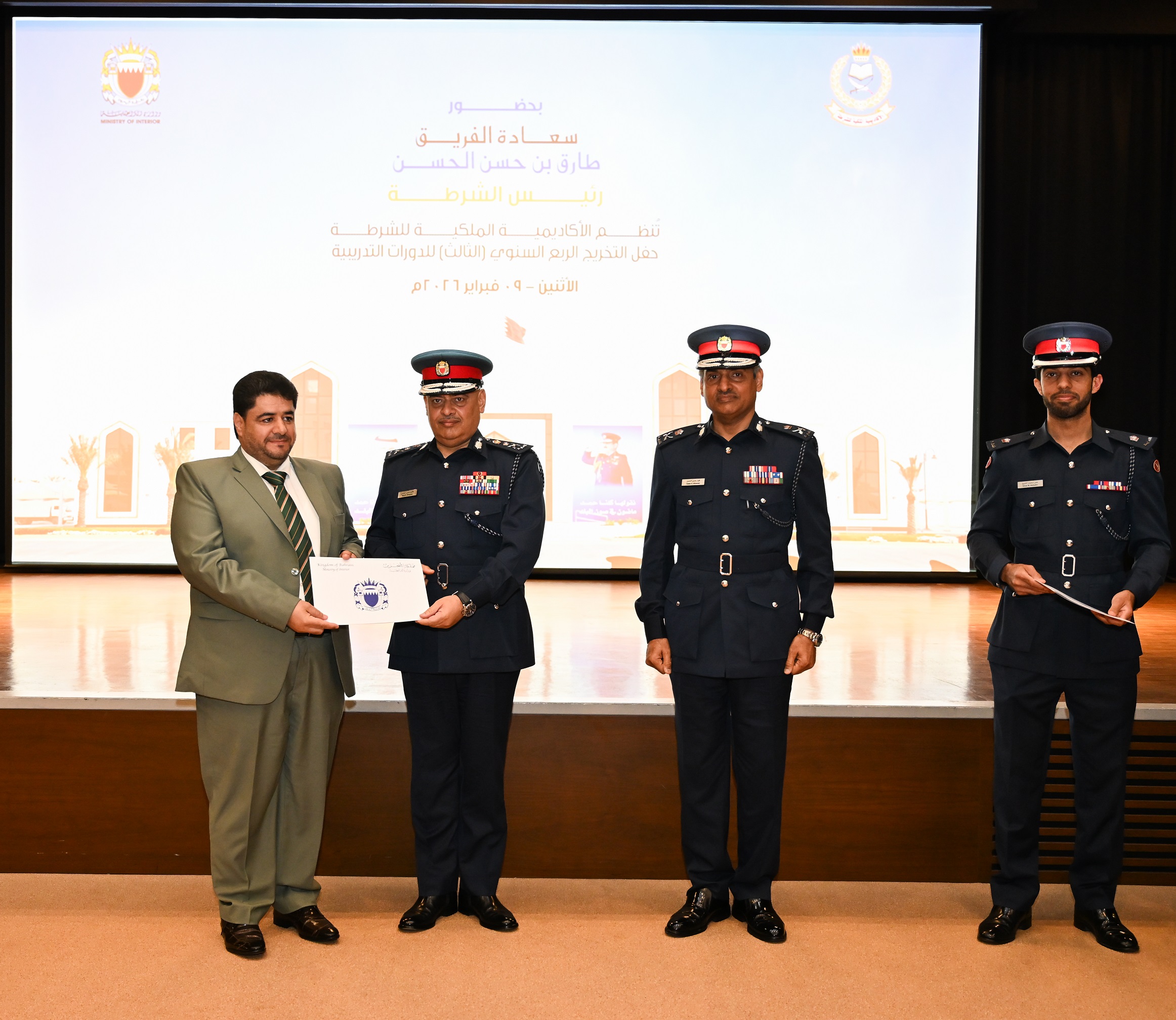
The Chief of Police, Lt-General Tariq Al Hassan, Chairman of the Scientific Council of the Royal Academy of Police, attended the graduation ceremony of 149 participants from a number of the academy’s training courses, in the presence of senior officers and officials from the Ministry of Interior.
On the occasion, the Chief affirmed that the courses fall within the framework of His Excellency the Interior Minister General Shaikh Rashid bin Abdullah Al Khalifa's keenness to invest in human capital and enhance professional and specialised competencies. He commended the graduates' advanced level, reflecting seriousness, discipline, and a commitment to achieving the highest standards of police performance. He noted that continued training and qualification constitute a fundamental pillar for developing the security work system, enhancing readiness, and keeping pace with developments and changes across various fields.
He added that the Academy continues to play its vital role in preparing and qualifying security personnel through modern, advanced training programmes that enhance skills development and the exchange of expertise, thereby positively reflecting on the quality of security services provided to the community. He explained that these courses fall within the Academy’s approved training plan, which focuses on developing personnel's practical and scientific capabilities, applying best training practices, and providing an integrated learning environment to achieve the desired training objectives.
For his part, the Commandant of the Royal Academy of Police, Major-General Fawaz Hassan Al Hassan, underscored the Academy’s commitment to keeping pace with technological advancement by employing modern technologies in the training process, including the interactive smart screens project, to enhance the quality of education and interaction within training halls.
During the ceremony, the Commandant reviewed a number of newly introduced and developed forums, courses, and training curricula, as well as specialised projects being implemented to support the continuous development of the training system. Among the most prominent is the project to reorganise the training process by introducing three main training tracks: qualification courses, refresher courses, and discipline courses.
The training programmes aimed to prepare informed police leaders equipped with strategic planning skills, sound decision-making capabilities, and crisis management skills grounded in modern scientific foundations. They also included the graduation of personnel from the Trainers Preparation Course, designed to qualify participants to serve as an effective nucleus for knowledge transfer using the latest training methods and tools, ensuring the quality of training outputs and the sustainability of professional impact.
At the conclusion of the ceremony, the Chief honoured the participants for their efforts and the commitment and excellence they demonstrated throughout the training courses.